

Qigong
Dive deeper
Image by Cyndi Bemel
What Does “Qigong” Mean?
Qigong (pronounced “chee-gong”) means “energy cultivation” or “skill with energy of your body.”

Image by Cyndi Bemel
Qi (Chi): the life force or vital energy that flows through your body, mind and emotions (E-MOTION = E-nergy in MOTION)
Gong: the practice of working with that energy – gently, skillfully, and with awareness
Through relaxed, mindful movement and breath, Qigong works with both the physical body and our internal experience, helping us sense how form and formless interact within us.

What Are Meridians?
In Traditional Chinese Medicine, meridians are energy pathways that flow through the body, much like rivers nourishing the land or electrical wiring carrying power to our appliances.
Meridians carry Qi/Chi (pronounced chee), our bio-electrical internal energy, through the organs, muscles, and connective tissue, supporting communication and coordination throughout the body.
Modern research is beginning to explore how the body’s bioelectrical signals and communication systems may travel through the fascia, the web-like connective tissue that links and supports every part of the body.
Some scientists suggest that this interconnected fascial network may relate to what Traditional Chinese Medicine has long described as meridian pathways, offering a potential bridge between ancient wisdom and modern understanding.
When these pathways are supported and functioning well, we tend to feel more vibrant, balanced, and resilient… physically, mentally, and emotionally.
Meridians form an important foundation within Qigong practice and Traditional Chinese Medicine. Through gentle movement, breath, and awareness, Qigong helps support and harmonize these pathways, creating a natural bridge between movement, energy, and whole body health.
Image by Cyndi Bemel
How Qigong Fits into Traditional Chinese Medicine (TCM)
Qigong is one of the Five Branches of Traditional Chinese Medicine (TCM)—the others being Nutrition, Herbal Medicine, Massage, and Acupuncture.
You can think of Qigong as the movement or exercise branch of this system—essentially, the exercise of acupuncture.
Where acupuncture uses needles to move energy (Qi), Qigong uses breath, movement, and intention to achieve a similar purpose.
Regular practice…even just ten minutes a day, helps balance the body’s energy flow, supports overall health and healing, and serves as a gentle form of prevention, maintaining vitality, mobility, and emotional harmony before imbalance occurs.
The Energetic Foundations of Qigong
To understand how Qigong restores harmony in the body, it helps to explore the two guiding maps of Traditional Chinese Medicine:
Yin and Yang: the balance of opposing yet complementary forces,
The Five Elements: the natural cycles that express how energy moves through life and the seasons.
These principles are living patterns we can experience directly through movement, breath, and awareness.
Together, they form the energetic language through which Qigong helps us come back into balance.
Image by Cyndi Bemel
Yin and Yang
At the heart of Qigong is the balance of Yin and Yang, two complementary forces present in all aspects of life.
• Yin reflects the receptive, cooling, and nourishing qualities of nature. It is expressed through night, stillness, rest, and inward reflection.
• Yang (pronounced yawng) reflects the active, warming, and expansive qualities. It shows up as day, movement, engagement, and outward expression.
Rather than being opposites, Yin and Yang depend on one another. Each contains the seed of the other. Movement and rest, effort and ease, activity and recovery are all necessary for harmony and health.
Imagine if we tried to stay awake all day and all night, never resting… or if we slept all day and never moved or engaged with life. Either extreme would quickly throw the body and mind out of balance. Health depends on the natural rhythm between activity and rest, doing and being.
Just as day flows into night and the tides rise and fall, your energy is designed to move through these natural cycles. When Yin and Yang are in harmony, the body feels strong yet relaxed, the mind is sharp yet calm, and life flows with greater ease and stability.
Through Qigong practice, you learn to:
• Balance strength with softness, moving with power without strain
• Cultivate grounding and calm while awakening vitality and warmth
• Restore the body’s natural rhythm of expansion, rest, and renewal

You can sense this rhythm in everyday life. As the sun sets and the moon begins to rise, the vibrant energy of Yang naturally softens, giving way to the quiet calm of Yin
Once we understand Yin and Yang as the dance of balance, The Five Elements show us how that balance moves through the ever-changing cycles of life and nature.
Together, they form the energetic foundation of Qigong - teaching us to live in rhythm with both the world around us and the world within.

The Five Elements
If Yin and Yang teach us about balance, the Five Elements show us how that balance moves and changes over time. They help us understand the rhythms of nature, the turning of the seasons, and the ongoing transformation within our own bodies.
The Five Elements, Metal, Water, Wood, Fire, and Earth, form a foundation of Traditional Chinese Medicine and Qigong. Each element is connected to specific organ systems, emotions, and seasons, describing how energy circulates and renews itself within us.
The Elements at a Glance
• Metal: Autumn
Lungs and large intestine, supporting breath, immunity, courage, grief and letting go
• Water: Winter
Kidneys and bladder, governing deep reserves of energy, rest, fear, and inner peace
• Wood: Spring
Liver and gallbladder, supporting growth, flexibility, vision, forward movement, and the balance of anger and kindness
• Fire: Summer
Heart and small intestine, nurturing joy, connection, compassion, impatience, and love
• Earth: Late summer
Spleen and stomach, supporting digestion, nourishment, anxiety, worry, overthinking, and connection
As we explore the Five Elements, we begin to recognize how the rhythms of nature and the seasons live within us.
From there, Qigong gently turns our attention inward, inviting us to experience how the body, heart, mind, and spirit work together as one integrated whole.
This understanding leads us into the Three Treasures, a foundational teaching that supports balance and vitality from the inside out.

The Three Treasures: Body, Heart, and Mind
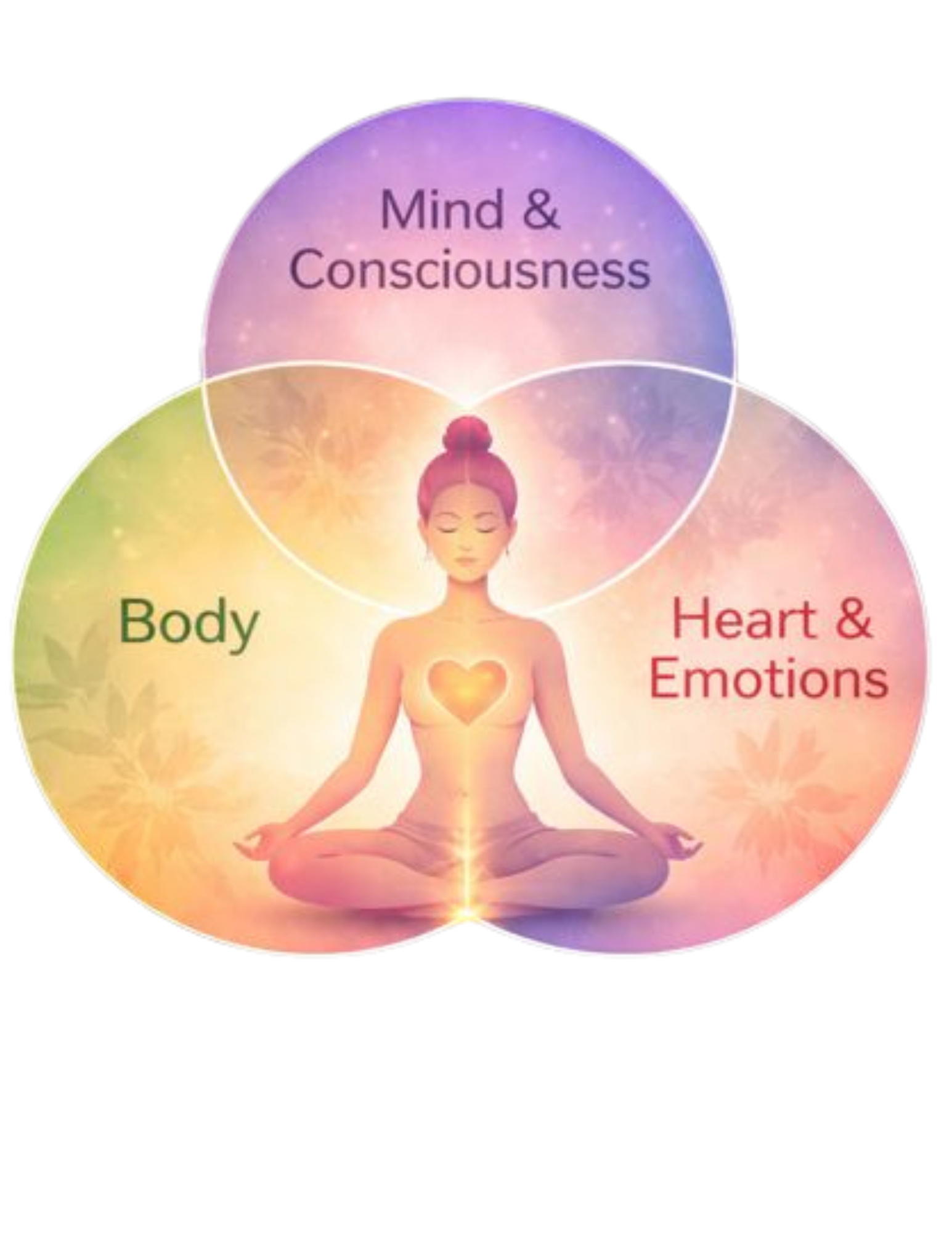
In Qigong, the body, heart and mind are often called the “Three Treasures”. They are also known as the “Three Marvels”. because when these three parts of us come into harmony, something remarkable happens...we feel more whole, more connected, more at peace, and healthier in all three areas
Body
Through mindful breath and gentle movement, Qigong helps warm the body and soften connective tissues, build strength, and improve mobility and balance, supporting longevity, posture, stability, and overall quality of life.
Heart/Emotions
Through breath, healing sounds, movement, and intention, Qigong creates space to release long held emotional patterns carried in the physical body, allowing for greater joy, inspiration, compassion, and inner peace.
Mind/Spirit
Through observing the body in motion, Qigong helps calm and steady the mind, strengthening awareness, presence, and clarity to guide the body and emotions, while supporting a deeper connection to spirit.
Why Spiral Movements?
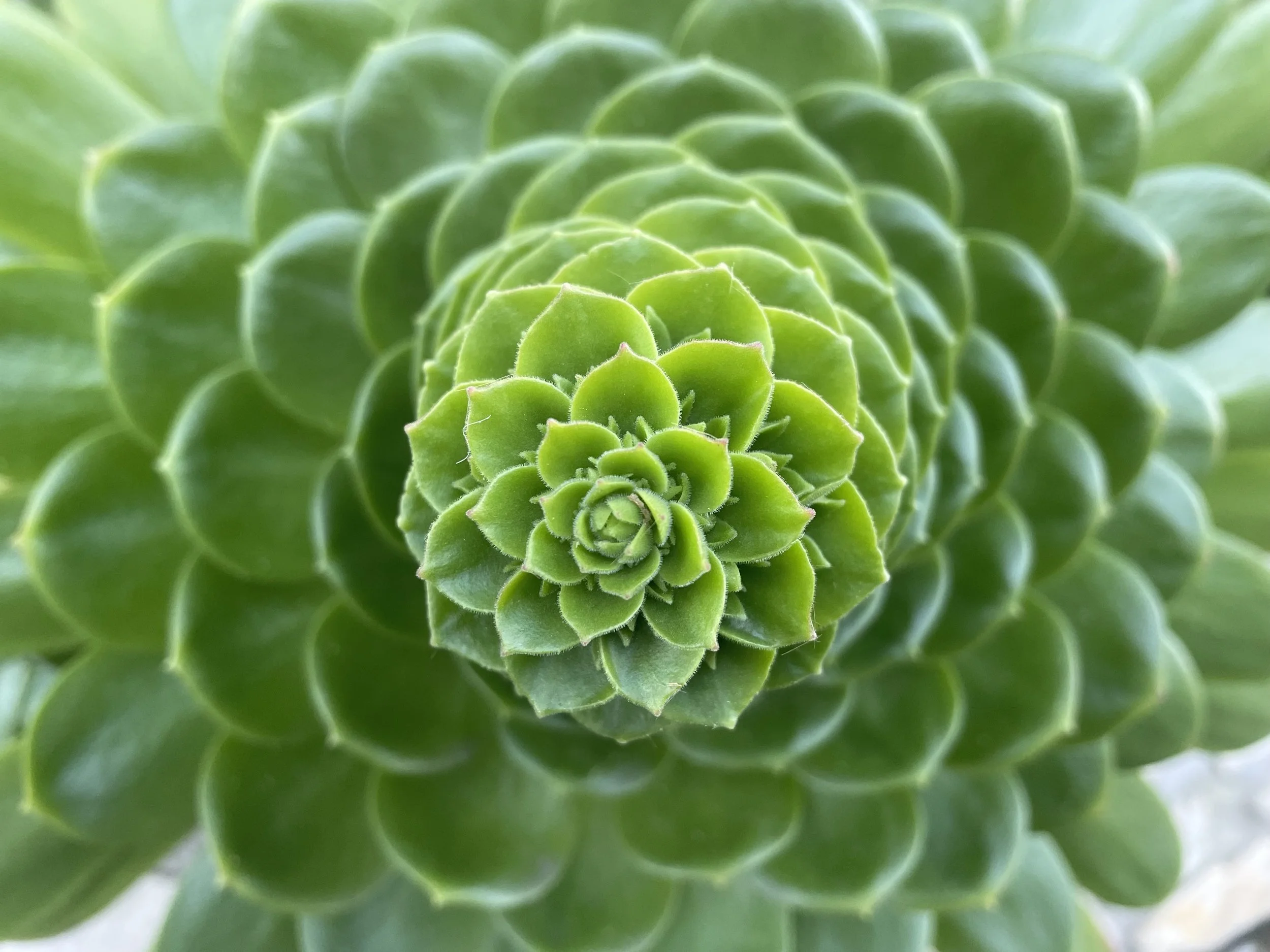
Spiraling is one of nature’s most powerful patterns—it’s found in DNA strands, ocean waves, galaxies, seashells, and unfurling leaves.
In Qigong, spiral movements reflect these natural rhythms, helping energy move smoothly through the meridians and the body.
Spirals unwind tension in the joints, spine, and fascia
They promote natural rotation and joint mobility, protecting against stiffness and overuse
Spiraling supports coordination, balance, and the free flow of Qi throughout the system
These spiral movements are especially powerful when applied to the body’s central channel—the spine.
Image by @asthikl
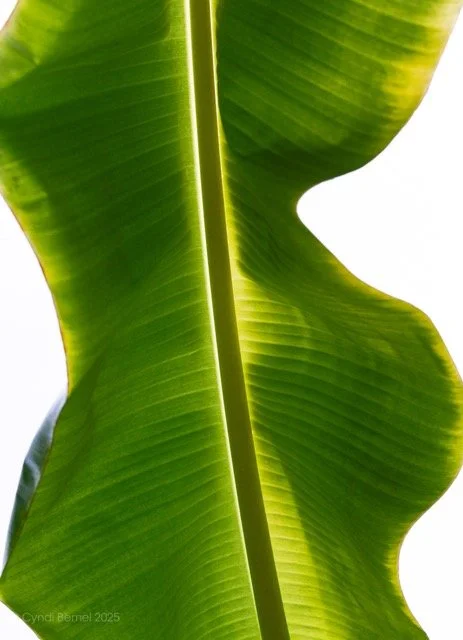
Image by Cyndi Bemel
spine health
The spine is at the heart of every Qigong practice. Just as a leaf’s stem carries nourishment through its veins, the spine serves as the body’s central energy channel, supporting structure, movement, and our nervous system.
In Qigong Fundamentals, we work to prevent and ease stiffness while maintaining healthy spinal mobility through:
Gentle, spiral movements that decompress the spine and keep the vertebrae supple
Intentional posture and breathwork that improves our nervous system, alignment and circulation of Qi
Smooth transitions and fluid rotation that support joint health and balance
Awareness-based movement, teaching you to move from your center rather than from tension
A healthy spine is key to longevity and vitality…physically, energetically, and emotionally.
Qigong and Tai Chi: How They’re Connected
Qigong and Tai Chi come from related Chinese movement traditions and share many foundational principles. While they are different practices, they overlap in meaningful ways and are often taught alongside one another.
Image by Cyndi Bemel
• Qigong is an ancient category of practices with roots that extend back thousands of years. Over time, it evolved into a vast and diverse collection of practices supporting health, vitality, spiritual cultivation, and martial training.
• Tai Chi developed later as a martial art and incorporates many of the same energy-cultivation principles found in Qigong, organizing them into structured, flowing forms.
• Many Tai Chi lineages include Qigong as part of foundational training.
• Tai Chi is commonly practiced through continuous, choreographed forms, with movements that may contain subtle martial applications such as yielding, redirecting, blocking, or striking, all practiced slowly and with control.
• Qigong practices tend to be simpler and more repetitive, allowing practitioners to focus on sensing movement, breath, and internal energy without needing to memorize a long sequence.
• Qigong movements are typically shorter, highly adaptable, and can be practiced standing or seated, making them accessible for a wide range of bodies and life stages.
Both Qigong and Tai Chi emphasize relaxation, alignment, breath awareness, and the cultivation of internal energy, expressed through different structures and movement patterns. Together, they support health, resilience, and inner balance. Many people experience Qigong as an accessible entry point, as well as a complementary practice for those who enjoy or are curious about Tai Chi.